If you are buying custom windows for a project, you do not need a perfect drawing package before you contact a supplier. You can start the conversation with rough sizes, material direction, opening style, quantity, project country, and any glass or colour preference you already know.
That first message is not the same as a final quotation. A supplier can use it to understand the project and give an early recommendation. Before the quotation becomes formal and comparable, the details need to become clearer: drawings or a window schedule, trade term, lead-time expectation, customization requirements, payment terms, packing, and the exact window configuration.
Durable's contact page already follows this low-friction approach: send the information you have, even if drawings or final specifications are not ready yet. This guide expands that idea into a practical RFQ checklist for builders, contractors, distributors, architects, importers, and project buyers.
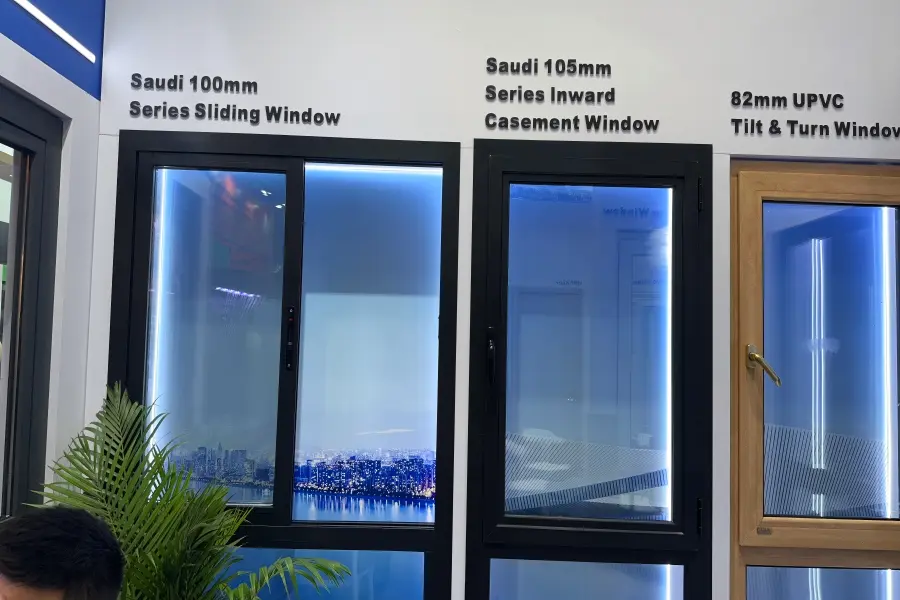
Quick Answer: What Should You Send for a First Window Quote?
For the first inquiry, you do not have to send a huge technical package. A short email is fine as long as the supplier can understand what the project is and what you are looking for.
At a minimum, give them the project location, window quantities or approximate sizes, the type of building, preferred window material, and any requirements you already know. If you already have a window schedule or drawings, attach them. If something is not decided yet, just say that.
For example, if the glass specification is still open, it is better to write "please recommend a suitable double-glazing option" than to leave the supplier guessing whether you need single glass, Low-E glass, laminated glass, or something else.
Use this starter checklist:
| Send this in the first inquiry |
Why it helps the supplier |
| Project country or destination market |
Climate, common construction practice, export route, and document expectations may change the recommendation. |
| Window material |
State whether you are considering uPVC, standard aluminum, or thermal-break aluminum. If you are unsure, say that clearly. |
| Opening method |
Casement, sliding, awning, fixed, hung, tilt-and-turn, or other operation changes the frame, sash, sealing, and hardware. |
| Approximate size |
Rough width and height are enough to start; final sizes can be confirmed later from drawings or a window schedule. |
| Quantity |
A single villa, a low-rise housing project, and a multi-unit commercial order are not quoted the same way. |
| Glass direction |
Single, double, triple, tempered, laminated, Low-E, or "not sure yet" gives the supplier a starting point. |
| Colour and lamination |
Frame colour, coating, wood-grain finish, or lamination affects production and quotation scope. |
| Photos, sketches, drawings, or previous quote |
Any of these can reduce assumptions, even if the documents are not final. |
If the project is still at an early stage, there is no reason to wait until every drawing is finished before contacting manufacturers. Tell the supplier which information is confirmed and which parts are still being discussed.
This happens quite often with project inquiries. The window quantities may be known, while the final glass configuration, hardware brand, color, or even some opening sizes are still being reviewed. If the supplier knows that from the beginning, they can make the quotation accordingly instead of pricing one configuration and then having to redo the whole quote when the drawings change.
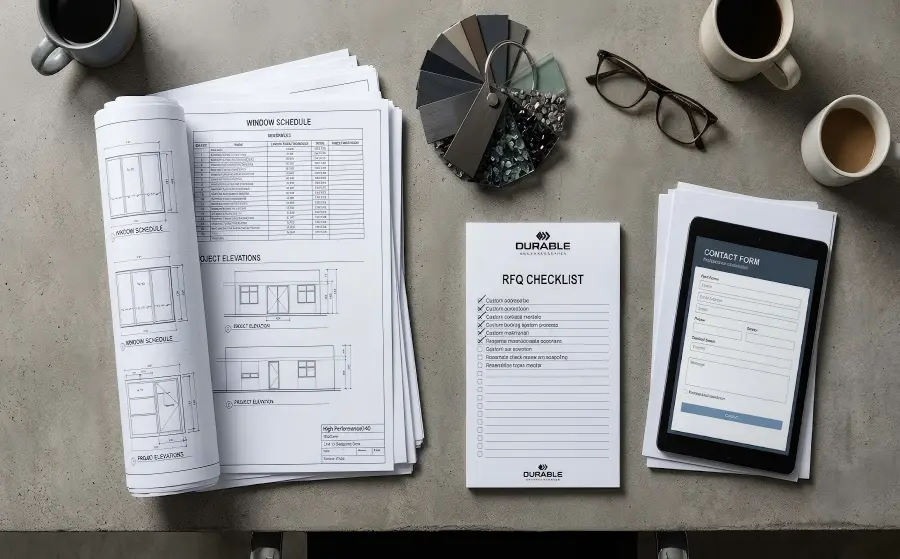
First Inquiry vs. Formal Quotation: What Changes?
Your first inquiry can still have some open questions. What you want to avoid is getting to the formal quotation stage and finding out that the supplier has filled in those missing details differently from what you had in mind.
For example, two suppliers may both quote "aluminium windows," but one may be using a standard aluminium system and the other a thermal break system. Their glass, hardware, wall thickness, finish, and packaging may also be different. At that point, the two prices are difficult to compare unless the quotation shows what each supplier has actually included.
For a window project, the first message can be simple, but the final commercial comparison needs a tighter scope. Treat the first reply as an initial direction until the supplier has confirmed the exact product and commercial assumptions used for its price.
For a window project, that means the first message can be simple, but the final commercial comparison needs a tighter scope.
| Stage |
What is enough |
What is not enough |
| First inquiry |
"We need uPVC sliding windows for a low-rise housing project in Panama. Approximate size is 1200 x 1200 mm, around 200 units, double glass preferred. Drawings are not final yet." |
"Please send your best window price." |
| Supplier's early reply |
Product direction, questions to confirm, rough configuration advice, and the information needed for the next step. |
A final decision based only on a broad product name. |
| Formal quotation |
Confirmed sizes or drawings, material, opening method, glass, colour/finish, hardware, packing, trade term, lead-time expectation, customization, payment terms. |
Two supplier quotes using different glass, hardware, sizes, packing, or delivery terms. |
| Final order review |
Approved drawings, final schedule, confirmed commercial terms, packing method, labels/accessories, and any required documents. |
Relying on an old rough quote after specifications changed. |
A common situation is that one supplier sends a detailed quotation while another replies with something like "USD XX per square meter." The second number may look cheaper, but you do not yet know what it covers.
Glass is a typical example. One supplier may include a specific double-glazing configuration, while another has not included the glass details at all. The same problem can happen with hardware, powder coating, laminated finishes, screens, packaging, or delivery terms.
Before deciding that one factory is cheaper, put the quotations side by side and check the actual configuration and delivery boundary.
The Window Details That Should Be in Your RFQ
The RFQ should give the manufacturer a clear picture of the package you are asking them to price. It does not have to be complicated, but the basic project information should be there.
For example: project location, building type, approximate quantities, window sizes if available, material, glass requirements, color or finish, hardware requirements, target delivery time, and destination port. If you need FOB or CIF pricing, state the Incoterm and port instead of simply asking for the "best price."
This is something we see in project inquiries as well. A buyer may provide detailed window drawings but forget to mention the destination port, or specify the profile but leave the glass and hardware open. Those missing details can make two otherwise similar quotations look very different.
A "custom window" can mean different materials, opening styles, glass packages, hardware levels, finishes, and packing methods.
Start with material. For this project, the usual options are uPVC, standard aluminum, and thermal-break aluminum. If you do not know which one fits the project, say that in the inquiry. Durable can recommend a profile direction when the project condition is clear enough.
Opening method comes next. "Casement" is still not precise enough if the project needs inward opening, outward opening, or tilt-and-turn. Sliding, awning, fixed, hung, bay, bifold, and other window types all change the hardware and frame arrangement.
Glass should be described by direction, even if the final build-up is not chosen. A buyer can write "double glazing preferred," "tempered glass required," or "need help choosing between normal glass and Low-E." If energy performance matters, ask for product-specific test reports, ratings, or other documentation required by the target market instead of relying on a broad term such as "energy-saving glass."
The National Fenestration Rating Council (NFRC) explains that its window labels report product-level U-factor and solar heat gain coefficient (SHGC). Where these measures matter to the project, compare the actual rated configuration rather than a general energy-efficiency claim.
Size is another early divider. Rough dimensions are acceptable for the first discussion. For a formal quote, a window schedule or drawings are better because they show how many units share the same size and where special openings exist.
Colour and lamination also belong in the RFQ. Standard white, powder-coated aluminum, wood-grain finish, special RAL colour, or laminated uPVC do not create the same production path. If colour is not decided, say whether you need a standard finish or a sample-confirmed custom finish.
What Drawings, Window Schedules, or Photos Help the Supplier?
A manufacturer does not need a perfect set of project documents before starting the discussion. If you have preliminary drawings, a window schedule, elevations, or even a simple list of opening sizes, send what you have and explain which version it is.
That gives the supplier something concrete to review. They can also tell you where more information is needed before the quotation can be finalized.
For projects involving performance requirements or certifications, it is also worth checking the documents against the actual proposed system. Ask the supplier to identify the system name covered by the certificate or test report, the glass configuration used, the applicable market or standard, and the scope of the report. Not every project needs this level of documentation, but when certification matters, it is better to check the actual coverage than simply collect certificates.
For private B2B sourcing, clear requirements give the supplier a usable basis for its recommendation and price. The practical goal is to identify the goods, quantity, technical specifications, drawings or plans where available, and documents required by the project. New Zealand Government Procurement similarly states that clear, concise requirements make it easier for suppliers to respond, and identifies quantity, delivery location, standards, and delivery timeframes as information to define in a requirements document.
For a window project, the most useful documents are usually:
| Document or file |
Use it when |
What it clarifies |
| Window schedule |
You have repeated units, multiple floors, or many openings. |
Mark, size, quantity, opening type, location, and grouping. |
| Architectural drawings |
The project is beyond early budgeting. |
Elevations, opening positions, floor levels, and design intent. |
| Photos of openings or site |
Replacement or renovation projects. |
Wall condition, existing frame, access, and possible installation questions. |
| Previous supplier quote |
You want a like-for-like comparison. |
The exact assumptions another supplier used. |
| Simple sketch |
You are still early and do not have formal drawings. |
Rough opening layout and desired operation. |
If you send a drawing, mention whether it is current. A supplier may treat a drawing as the pricing basis. If the drawing changes later, the quotation may also change.
Export and Commercial Details: Trade Term, Lead Time, Payment, and Packing
Window quotations for export projects are not only product lists. They also need commercial boundaries.
Trade terms matter because EXW, FOB, CIF, and other agreed delivery terms can change what is included. In a quotation conversation, one supplier may quote factory handover while another includes ocean freight or insurance. The product may be similar, but the quote scope is not. Confirm the responsibilities in writing with the supplier and freight provider before placing an order.
The International Chamber of Commerce (ICC) describes Incoterms as rules that clarify the tasks, costs, and risks involved in delivering goods from seller to buyer. That is why a trade term and named port belong in a comparable export quotation.
For export buying, clarify these points before you treat two offers as comparable:
| Commercial detail |
What to write in the RFQ |
Why it changes the comparison |
| Trade term |
"Please quote FOB Qingdao" or "Please advise EXW and CIF options." |
The price may include different logistics responsibilities. |
| Destination |
Port, city, or delivery address if known. |
Freight, packing, and route assumptions depend on destination. |
| Lead-time expectation |
"Project needs shipment around..." or "schedule not fixed yet." |
The supplier can flag production and delivery feasibility. |
| Payment terms |
Ask what payment method and terms apply before order confirmation. |
Commercial terms affect order planning and risk. |
| Packing requirement |
State if export crate, pallet, labels, accessories packing, or special protection is needed. |
Packing affects shipment safety, handling, and quote scope. |
| Required documents |
Ask for packing list, invoice, certificates, test data, or product documents if your market needs them. |
Missing documents can delay import, inspection, or project approval. |
Do not use Incoterms language loosely. If your team is not sure which trade term to request, ask the supplier to quote more than one option or explain what is included in each offer. This is not legal advice; it is a practical way to prevent two quotations from looking comparable when they are not.
What Happens When RFQ Details Are Missing?
Missing information does not always stop a supplier from replying. It does make the reply less stable.
Here is the difference:
| Missing detail |
Supplier may have to assume |
Buyer risk |
Better RFQ wording |
| Material |
uPVC, standard aluminum, or thermal-break aluminum. |
The recommended system and price level may not match the project. |
"We are considering uPVC or aluminum; please advise based on a low-rise residential project in..." |
| Opening method |
Sliding, casement, awning, fixed, or mixed types. |
Hardware, sealing, frame layout, and operation may be wrong. |
"Main windows are sliding; some bathrooms may need awning windows." |
| Size |
Standard or approximate dimensions. |
A rough price may not survive final drawing review. |
"Approximate opening is 1200 x 1200 mm; final drawings will follow." |
| Glass |
Basic glass instead of safety, insulated, laminated, or Low-E glass. |
The quote may miss energy, safety, acoustic, or comfort requirements. |
"Double glass preferred; please advise if Low-E or laminated glass is needed for this project." |
| Colour or finish |
Standard colour. |
Later colour changes may affect cost, sample approval, and lead time. |
"White is acceptable for uPVC; aluminum may need dark grey powder coating." |
| Quantity |
One-off unit or bulk project volume. |
Production planning and packing assumptions may be inaccurate. |
"Estimated 200 units, final quantity by window schedule." |
| Trade term |
Factory price, port price, or delivered estimate. |
The lowest number may exclude logistics. |
"Please state whether the quotation is EXW, FOB, or CIF." |
| Drawings |
Supplier works from rough description. |
Final quote may change when drawings arrive. |
"Drawings are not final; please give an initial configuration review first." |
You do not need to make the RFQ long just to make it look professional. Think about what you would tell an engineer or sales manager if you were discussing the project on a call.
Something like this is usually enough to start:
"We are working on a residential project in Chile. The current requirement is around 600 windows. The drawings are attached, but the final glass specification is not confirmed yet. Please quote a suitable double-glazing option and let us know the difference if Low-E glass is used. We need FOB pricing to Shanghai."
That gives the supplier a clear starting point without pretending that decisions have already been made when they have not.
Copyable Short RFQ Template
You can paste and adapt this message when contacting Durable:
Hello Durable team,

We are preparing a window quotation for a project in [country/city]. The project is [residential/commercial/hotel/apartment/etc.].

Material direction: [uPVC / aluminum / thermal-break aluminum / not sure yet].
Opening method: [sliding / casement / awning / fixed / mixed], with [inward / outward / tilt-and-turn] if applicable.
Approximate size: [width x height] or drawings/window schedule attached.
Quantity: about [number] units.
Glass: [single / double / triple / tempered / Low-E / not sure yet].
Colour / finish / lamination: [details if known].

Please advise suitable configuration and what information you need for a formal quotation.
That template is intentionally short. If you already have drawings, a previous quote, photos, a destination port, or a required trade term, attach them. If not, use the first inquiry to start the technical conversation.
Contact Durable for a project-based window quotation
When a Rough Quote Is Not Enough
A rough quote can help with early budgeting. It should not be used as the final basis for procurement when the project has technical, export, or compliance requirements.
Move from rough inquiry to formal quotation when any of these apply:
| Project condition |
What to request before final comparison |
| Energy performance matters |
Ask for the product-specific ratings, test reports, or other documents required by your target market before comparing prices. |
| Safety or acoustic glass is required |
Confirm glass build-up, thickness direction, tempering, lamination, or acoustic requirement before comparing prices. |
| Project has many repeated units |
Prepare a window schedule so sizes and quantities are grouped correctly. |
| Import/export scope matters |
Confirm trade term, destination, packing, invoice, packing list, and document needs. |
| Custom colour or branding is required |
Confirm colour sample, lamination, packaging, labels, or OEM/ODM requirements before final quote. |
| Drawings are changing |
Treat early quotes as indicative until the drawing revision is fixed. |
A clear quotation should make it possible to see where the supplier's responsibility ends. Otherwise, problems can show up later as additional costs or another round of price negotiations.
If you are buying on an FOB basis, state the port. If you need CIF, give the destination port. Also check whether packaging, loading, export documentation, and other agreed items are included.
For a project order, these details are worth confirming before production starts. It is much easier to correct a missing item in the quotation than to discover it when the goods are already packed and ready to ship.
The buyer avoids comparing incomplete offers. The supplier avoids promising a price on a scope that is still moving.
Where Durable Product Pages Fit in the RFQ
If you already know the material direction, start from the relevant product page before sending the inquiry.
For uPVC projects, Durable's uPVC window range shows common opening types, glass options, colour options, hardware, profile systems, application scenarios, and export packaging. That page is useful when you need to describe whether the project is sliding, casement, awning, fixed, bay, folding, or another uPVC window type.
For aluminum projects, Durable's aluminum window page is the better starting point for frame material, surface finish, glass, hardware, size, application, and packing direction. If the project needs better insulation, the aluminum page can also lead buyers toward thermal-break options.
For projects involving drawings, private label, custom packaging, or product development, Durable's OEM and ODM page explains the broader custom-manufacturing route.
A manufacturer's website is useful before you send an RFQ. You can check which window systems they produce, whether they handle uPVC, aluminium or thermal break aluminium, what markets they appear to serve, and what project information they make available.
But do not assume that everything shown on the website is automatically included in your quotation. Treat those pages as background information and put the requirements for your own project directly into the RFQ.
That is especially important when a supplier has several product ranges. The system shown on a product page may not be the same one used in your quotation, so it is worth asking the supplier to state the actual system and configuration they are pricing.
A supplier still needs your project context before it can recommend the right configuration.
A Simple Way to Compare Supplier Replies
After suppliers reply, do not compare only the final total. First compare the assumptions.
Use this quick review:
| Quote item |
Check whether both suppliers used the same basis |
| Material |
uPVC, standard aluminum, or thermal-break aluminum. |
| Opening method |
Same window type and operation. |
| Size and quantity |
Same schedule, drawing revision, or approximate size basis. |
| Glass |
Same glass type, safety treatment, coating, and performance requirement if applicable. |
| Hardware |
Same hardware level, accessories, screens, and operation needs. |
| Finish |
Same colour, coating, lamination, sample requirement, and batch expectation. |
| Packing and delivery |
Same export packing, trade term, destination, and document scope. |
| Commercial terms |
Same validity period, payment terms, and lead-time assumption. |
If one quotation is missing the glass specification, hardware, finish, packaging, or delivery term, it is not really comparable with a quotation that includes all of those details.
For example, Supplier A may quote a thermal break aluminium window with double glazing, specified hardware, export packaging, and FOB pricing. Supplier B may quote only the window frame and glass without clearly stating the hardware or delivery term. The second price can look much lower, but there are still several costs and specifications to clarify.
Before choosing the lower number, ask the supplier to fill in the missing items. Once both quotations are based on roughly the same specification, the price difference becomes much more meaningful.
For product-specific price factors, you can also review Durable's uPVC and aluminum cost-factor guides after the RFQ package is clear.
Sources and References
If you already have the drawings, window schedule, or a basic list of requirements, you can send them to Durable through the contact page. You do not need to wait until every detail is finalized.
For project inquiries, we can work from the information available at that stage and point out the items that still need confirmation. If the project requires OEM/ODM coordination, specific packaging, or project documentation, it is also better to mention that in the first inquiry.