
Aug. 20, 2026
In our years of experience handling projects and providing quotes, we frequently encounter a common scenario: when clients receive price quotes for two different products, they often ask why there is such a significant price difference for windows of the same size. In reality, looking solely at price and dimensions does not reveal the underlying differences; the price gap stems from specific specifications such as glass configuration, profile series, wall thickness, and hardware accessories. Therefore, the correct approach is to first define the aluminum window system and then compare the quotes item by item.
This guide does not give a fixed export price. Many public price pages focus on consumer installation costs, local retail ranges, or simple product listings. Those figures do not describe a drawing-based international project quote. For B2B buyers, the more useful question is how to compare aluminum window quotes when two offers appear similar but may cover different systems.
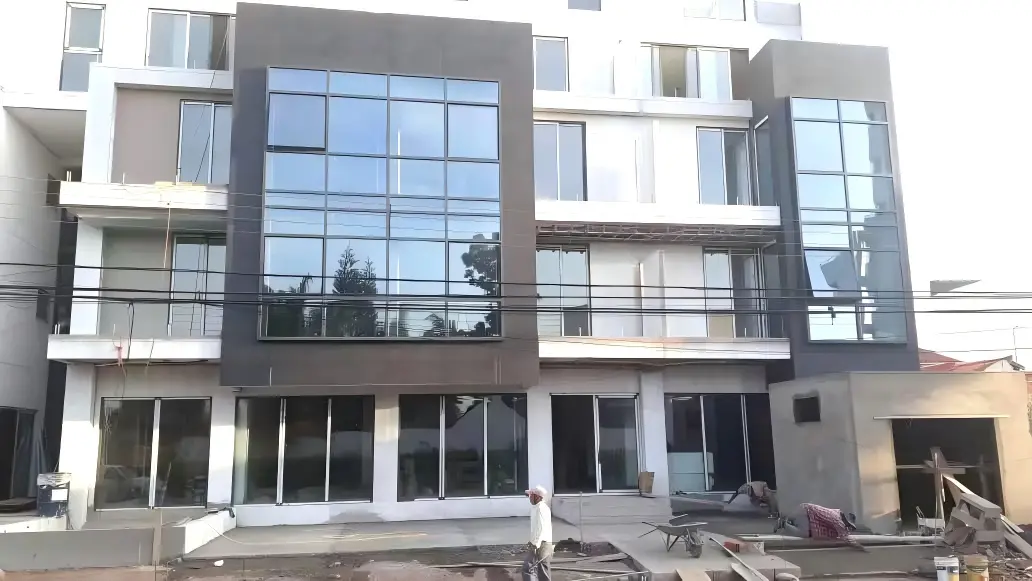
A product name is not a complete specification. Aluminum windows can differ by window type, dimensions, profile construction, glazing, hardware, finish, quantity, packaging, and the commercial terms used for delivery. Durable's public aluminum page reflects that reality: buyers can specify sizes, colors, glass options, hardware, opening styles, packing, and OEM/ODM requirements.
The glass is particularly easy to overlook. A supplier may describe both offers as "double glazing" while using different glass build-ups, coatings, spacers, or safety-glass requirements. ASHRAE treats frame type, glazing, spacers, operating type, and air leakage as parts of fenestration performance, not as interchangeable details. Its fenestration guidance is useful here because it keeps the discussion focused on the complete window rather than the frame name alone.
Delivery scope can change the apparent price as well. A price may cover factory supply only, while another offer may be built around a different named place or port. The International Chamber of Commerce explains that Incoterms rules allocate costs, risks, and obligations between parties. For a meaningful landed-cost comparison, record the exact rule, the named place or port, and what the supplier includes.
The rule of thumb is simple: do not compare the total cost until both sides are quoting the same specification and commercial scope.
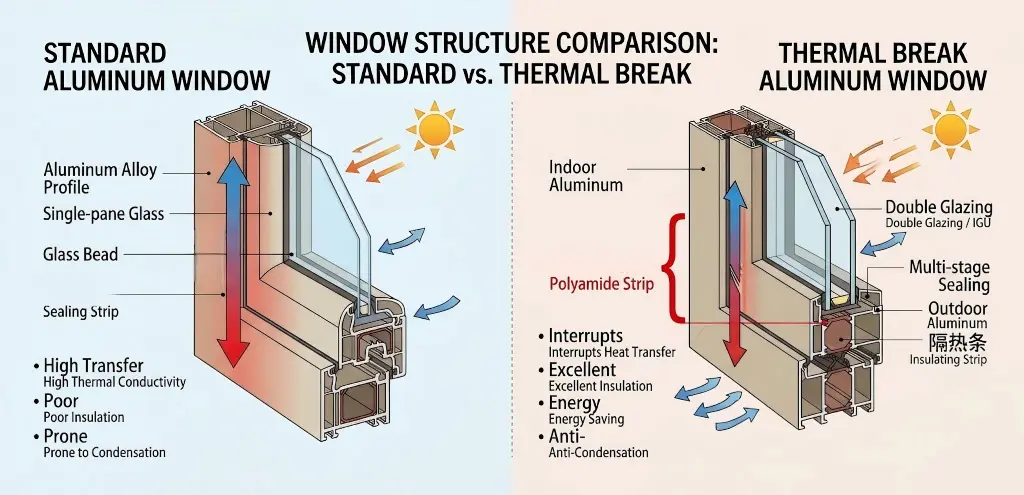
The first decision is not color or handle style. It is whether the quote is for standard aluminum or for a thermal-break aluminum system.
A thermal break is a low-conductivity separation placed within a conductive frame element to reduce heat flow. That is the definition used by the American Institute of Architects. In a window system, the thermal barrier separates the inner and outer aluminum profiles. It is not a decorative upgrade and it should not be treated as a small line item added to an otherwise identical standard-aluminum quote.
At Durable, both system types can be quoted with similar visible choices such as powder coating, anodized finishes, custom colors, and comparable wall thickness where the project allows it. The parts that often stop the quotes from being equivalent are the thermal-break structure, the selected glass, the sealing and hardware approach, and the performance documents required for the project.
| Comparison point | Standard aluminum quote | Thermal-break aluminum quote | What to align before comparing price |
|---|---|---|---|
| Frame construction | A continuous aluminum profile without a thermal barrier | Aluminum profiles separated by a low-conductivity thermal barrier | State the system type on both quote sheets. |
| Finish and color | Powder coating, anodizing, wood grain, or custom colors can be specified | The same finish categories can also be specified | Compare the same finish, color, and exposure requirement. |
| Wall thickness | Can be specified to the project brief | Can also be specified to the project brief | Do not assume that thermal break alone tells you the wall thickness. |
| Hardware | General-purpose hardware is common on standard projects | System hardware is more common when the complete system has higher requirements | List the opening method, hardware level, and any brand requirement. |
| Glass | Single glass or insulated glass may be considered | Insulated, Low-E, laminated, or tempered glass is more common in higher-spec discussions | Compare the full glass build-up, not only the phrase "double glazing." |
| Typical first discussion | Common residential or budget-led projects | Premium residential, commercial, or energy-focused projects | Let the final choice follow the project specification and documents. |
Keep in mind, this is a general framework, not a hard-and-fast rule. A well-specified standard aluminum system may work for a specific project. On the other side, a thermal-break system still needs the right glass, size, installation scope, and performance documentation. ASHRAE notes that the depth and continuity of thermal separation affect thermal performance. Just calling a window 'thermal break' does not replace the exact project specification. Read the ASHRAE fenestration chapter.
For projects that need the higher-spec route, Durable's thermal-break aluminum options show the available product category. Use that page to review the product options; use this article to normalize the quotation.
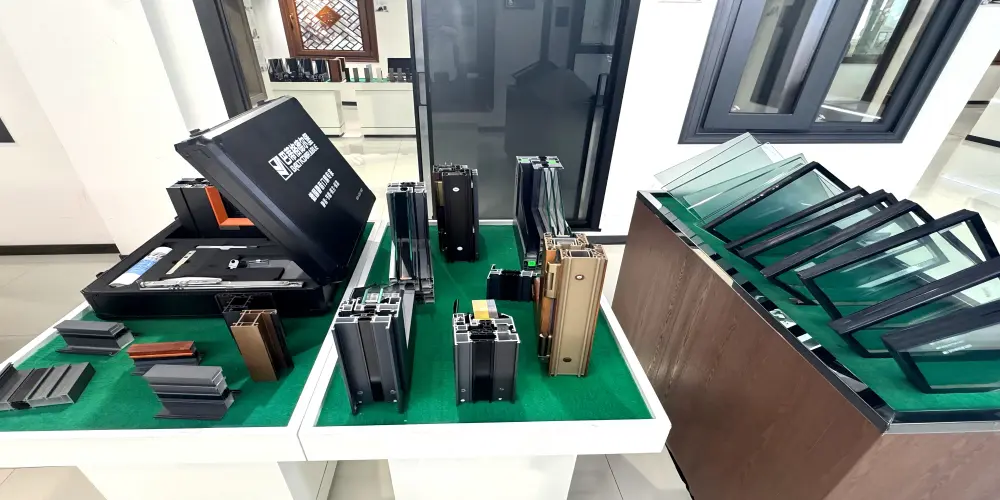
Write either "standard aluminum" or "thermal-break aluminum" into the first RFQ. "Aluminum windows" alone leaves too much open to interpretation. If the project has a thermal or condensation concern, include it with the inquiry so the supplier can identify the relevant system rather than pricing a basic frame by default.
Do not try to specify a thermal-break width from a generic article. Ask which thermal-break system is proposed and whether the supplier's documentation covers the actual opening style and configuration.
A fixed window, casement, sliding window, awning, hung window, and folding window do not use the same profile and hardware arrangement. Dimensions matter because they affect the profile, glass area, hardware, packing, and production plan. A useful first quote can start with approximate dimensions, but a firm comparison needs the same width, height, quantity, and opening direction in both offers.
That is consistent with Durable's live quotation process. A buyer can start with the information already available rather than waiting for final drawings. Rough sizes, a window schedule, photos, or an earlier quotation are all useful starting points.
"Low-E glass" and "double glazing" are not complete quote descriptions. Record the glass build-up, safety requirement, coating, and any spacer or gas-fill requirement that belongs in the project specification. A quote with laminated glass is not like-for-like with one using ordinary monolithic glass. A thermal break also does not make single glass and insulated glass equivalent.
When energy information is required, ask for the metrics for the proposed configuration. The NFRC explains the role of U-factor, solar heat gain coefficient (SHGC), and air leakage on its product-rating labels. Lower U-factor indicates better resistance to heat loss; SHGC describes solar heat admitted through a rated product. Neither figure should be copied from one window into another quote without checking the actual glass, frame, opening type, and rated configuration.
Hardware changes how a window operates and how the quotation is built. On standard aluminum work, general-purpose hardware may be suitable. On thermal-break or higher-spec work, system hardware is more common. The important detail is not the label alone. The quote needs to show the opening method, component level, and any requested brand or service requirement.
Durable's aluminum page publicly lists handles, hinges, rollers, locks, and screens as selectable hardware categories. That makes hardware a quote line to align, not a vague phrase such as "standard accessories."
Powder coating, anodized finish, wood grain, and custom colors are available on aluminum systems. Color does not tell you whether the frame is standard or thermal break, so it should not be used as a shortcut for judging value.
Put the same color code, finish type, and exposure expectation on both quote sheets. A black thermal-break frame with one coating specification is not comparable with a black standard-aluminum frame using a different finish just because both look black in a product image.
The wording "commercial grade" is not enough when a project has energy, air-leakage, structural, or water-penetration requirements. Request the applicable documentation for the proposed configuration and the relevant project condition.
The NFRC explains that commercial label certificates provide performance ratings for fenestration products installed on commercial buildings, while the FGIA explains that Performance Grade relates to applicable design pressure and other performance requirements. Those sources do not prove a rating for every Durable product. They explain why the buyer should not accept a generic material claim where the project requires configuration-specific documentation.
For exposed elevations, large openings, or commercial work, add the relevant design requirement, tested size, local code context, and performance-document request to the quote package. The right question is not "Is aluminum strong enough?" It is "What documentation applies to this window at this size and this project condition?"
Before comparing totals, identify what the supplier is selling. Is the offer for windows only? Does it include packing? Does it name a delivery term, port, or destination? Does it include an additional service, or is that service outside the supply scope?
Write the Incoterms rule and named place or port exactly as offered. This avoids comparing a factory-supply figure with a different shipping or risk allocation as if they were identical prices. The ICC's Incoterms 2020 overview is the reference for the role of those terms; contract interpretation should remain with the parties' commercial and legal advisers.
The most reliable way to review a quote is to put both offers into one worksheet before discussing the total. Leave a cell blank when a supplier has not provided a detail. A blank is information: it means the comparison is not ready.
| Item | Quote A | Quote B | What must match before price is compared |
|---|---|---|---|
| System type | Standard aluminum or thermal-break aluminum | ||
| Window type and opening | Fixed, sliding, casement, awning, hung, or folding arrangement | ||
| Dimensions and quantity | Width, height, opening direction, and count | ||
| Profile and wall thickness | The stated profile system and project requirement | ||
| Glass build-up | Glass type, thickness, coating, and safety requirement | ||
| Hardware | Component level, opening function, and brand requirement if any | ||
| Finish | Color code, surface treatment, and exposure requirement | ||
| Performance documentation | Requested U-factor, SHGC, air-leakage, or project performance documents | ||
| Packing and scope | Packing method and whether the offer is supply only or includes another scope | ||
| Delivery basis | Same Incoterms rule, named place or port, and quotation currency |
This format totally shifts how you negotiate. Instead of just asking why Supplier A costs more than Supplier B, you can point straight to the actual line items-like thermal breaks, glass, hardware, finishes, paperwork, or freight.
For standard housing or tight-budget jobs, starting with plain aluminum makes total sense. If the specs don't call for thermal breaks or high energy ratings yet, it's a good, practical baseline.
For high-end homes, commercial builds, or energy-strict projects, thermal-break is usually where you want to look first. That doesn't mean you must use it every time-it just means the project has higher standards, where you're juggling insulation, noise control, airtightness, and glass specs against the upfront price.
The decision should return to the submitted schedule and requested documents. The same aluminum frame category can lead to very different results when the glass, hardware, sealing, size, or design requirement changes.
In 2018, Durable supplied aluminum windows for a 12-story commercial center in Buenos Aires, Argentina.
This reference confirms project-supply experience. It is not a performance claim for a different building, and it does not establish a price, system specification, certification, or expected result for another project.
You don't need fully finished drawings to get started. Just send over whatever you have right now, and we can tweak the details together with the supplier as we go:
Where a project involves custom sizes, packaging, or a drawing-based requirement, Durable's OEM/ODM service is the relevant next page. For a first project quotation, use the contact page and send the available information. The missing details can be clarified before a firm comparison is issued.
Comparing standard aluminum with thermal-break aluminum as though they are the same system. The lower price may simply reflect a different construction.
Treating "double glazing" as a complete glass specification. The glass build-up and safety or coating requirements still need to match.
Leaving hardware as "standard." Record the opening function and hardware level so the two offers refer to the same operating requirement.
Ignoring delivery scope. A lower factory quote can be a different commercial offer from a quotation using another named delivery term or including different packing and services.
Requesting a final performance commitment before the configuration is finalized. Performance documentation must relate to the proposed window, not a generic product family or material label.
If you're cross-checking vendor quotes, just send us the system type, rough dimensions, window/door styles, quantities, job site location, and any glass or hardware preferences you already have in mind. Durable will look over the details and build a custom quote for your project
Ask for the documentation that the actual project requires. Depending on the brief, that may include U-factor, SHGC, air-leakage information, Performance Grade, design-pressure context, or other local-code and project documents. The document must match the proposed configuration.
Start with approximate size, quantity, opening style, project country, and whether you are considering standard or thermal-break aluminum. Add glass, hardware, drawings, photos, or a previous quote when available.
Yes. Finish, color, and wall thickness can be specified on either system. The presence of a thermal break, the glass, hardware, sealing approach, and requested documents are the more important differences to make visible before comparing the price.
No. Standard aluminum can be suitable for many common residential or budget-led projects. Thermal-break aluminum becomes more relevant when the project brief places greater weight on insulation, sound control, air tightness, or an energy-focused commercial specification.
The two offers may cover different systems, glazing, hardware, finishes, quantities, packing, or delivery terms. Put the specifications into one comparison sheet before treating the total amount as a price difference.


