
Aug. 25, 2026
Don't rush straight to asking for a quote. My suggestion is to screen the supplier’s background first: force them to show real mill test reports, past factory inspections, and export docs for jobs similar to yours. If they can’t show clear proof that their profile series and certification match your local building code today, moving to a quote is just a waste of time.
CIPS describes supplier evaluation as a process for evaluating and approving potential suppliers, monitoring performance, increasing value, mitigating risk, and driving improvement. It also separates desk appraisal, field research, and third-party appraisal as evaluation methods. The same logic applies when selecting a China window manufacturer for a B2B project: the goal is not to find the lowest number on a spreadsheet, but to reduce the risk behind that number.

Anyone can send you a video of an extrusion line or a assembly floor and claim to be a factory. What actually matters is their production limit: do they have automatic corner-crimping for heavy thermal break systems, precision CNC machining, or in-house IG units? A small workshop handling basic sliding windows won't have the machinery to execute a high-performance commercial curtain wall or tilt-and-turn order.
Before comparing prices, prepare a simple project profile:
This saves you from the classic mistake of emailing five vendors for a generic "per-square-meter price." Without clear specs, you’re comparing apples to oranges: one factory quotes 1.4mm aluminum with standard local hardware, while another quotes a 2.0mm system with Siegenia gear and double toughened Low-E glass. That bottom-dollar quote usually just means someone quietly downgraded your hardware brand, used thinner profile walls, or left out wooden crate packing.What I have just described is indeed something that has occurred among the suppliers.
A capable window supplier won't just toss a quick quote over the fence. If you send an inquiry and get an instant lump-sum price back without the rep asking for elevation drawings, glass makeup (like 6mm+12Ar+6mm), wind load requirements, or hardware specs, treat that as a huge red flag. Real window engineering requires technical clarification before the numbers can ever be accurate.
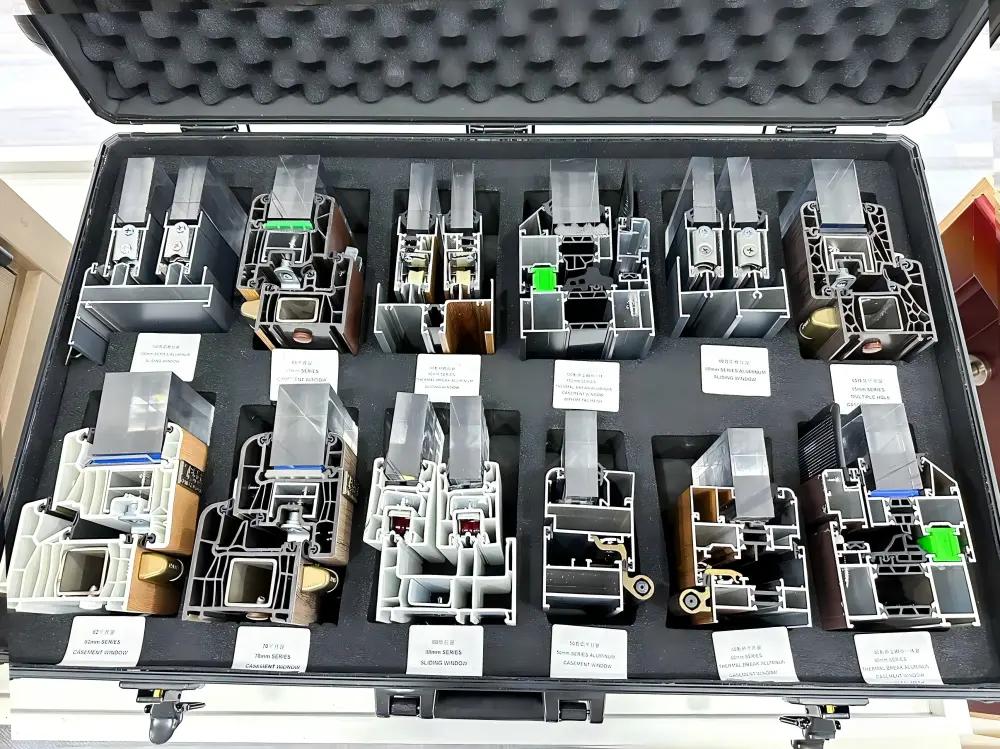
A window manufacturer can be very experienced with one type of project and less suitable for another. Before asking for a quotation, look at the kind of buildings the supplier normally produces for. A factory mainly making economical sliding uPVC windows for low-rise residential projects may be a good choice for housing developments, but that does not automatically make it the right supplier for a high-rise commercial project where aluminium system strength, wind load, glass performance, and hardware requirements are more demanding.
This is also something worth checking during the first inquiry. Instead of only asking for the price of a standard window, send the supplier the project type, approximate building height, opening sizes, glass requirement, and destination market. You will usually get a much clearer idea of whether their normal production experience matches your project.
For B2B buyers, product scope should be checked against the project, not against a catalog list alone.
Ask these questions:
On Durable's own site {company-profile}, the product route separates uPVC windows, aluminium windows, and thermal break aluminium windows. That separation matters for buyers because the right material depends on climate, project level, budget, wind pressure, and performance requirements.

For a low-rise residential project where the budget is tight, uPVC can make sense, particularly when the windows are not exposed to extreme heat or unusually high structural loads. Aluminium becomes more relevant when larger openings, stronger frames, commercial use, or a longer service life are important. For projects where both thermal performance and structural requirements matter, thermal break aluminium is often worth considering.
The material decision should also be based on the actual window configuration. Ask about the profile series, profile wall thickness, thermal break strip, glass build-up, and hardware rather than comparing “uPVC” and “aluminium” as two simple categories. A supplier should be able to explain why the proposed system is suitable for your building instead of simply recommending the product with the lowest quotation.
A certificate on a supplier's website is not enough by itself. During quotation review, ask the supplier to identify exactly which window system the certificate applies to, what glass configuration was tested, and which market or standard the test was intended for.
For example, if a supplier provides a certificate for an aluminium window system, check whether the certificate refers to the same profile series and configuration being quoted for your project. The same supplier may have several systems, and a certificate for one system should not automatically be treated as evidence for all of them.
For U.S. and Canada-related energy-performance discussions, the National Fenestration Rating Council explains ratings for windows, doors, and skylights and provides a Certified Product Directory. A buyer should not rely only on a logo in a brochure. Ask whether the rating or certificate applies to the same product line, frame material, glazing option, spacer, coating, size range, and market requirement.
For Australia-facing projects, HIA explains that AS 2047:2014 covers requirements for windows and external glazed doors in buildings, including materials, testing, construction, installation, and glazing. That does not mean every window from every supplier automatically qualifies for an Australian project. It means the buyer should check the actual documentation, product configuration, and local compliance path with the project consultant or certifier.
For Europe-related construction products, the European Commission explains the Declaration of Performance and CE marking framework under the Construction Products Regulation. Again, the practical buyer question is not "Do you have CE?" The better question is:
Which product, performance characteristics, standard, declaration, and intended market does this document cover?
When reviewing a China window manufacturer, ask for certificate files and test reports early. Then check:
One simple check can save a lot of confusion later: ask the supplier to mark the relevant system name or model directly on the certificate and compare it with the quotation.
The same applies to glass. If the quotation says double glazing, ask for the actual build-up — for example, glass thickness, spacer, Low-E coating if applicable, and gas filling if required. If the supplier is claiming compliance for a particular market, ask them to state which certificate or test report supports that claim. This takes only a few minutes and is much more useful than collecting a folder full of certificates without checking what each document actually covers.
Factory photos are useful for understanding the supplier's production scale, but they tell you very little about how your order will be controlled. More useful evidence includes photos of profile processing, glass production or assembly, hardware installation, finished-window inspection, and packaging before loading.
For example, at Durable, the production setup includes a dedicated glass workshop, so glass processing and the finished window assembly can be checked as part of the same production process. For a buyer, the more important question is still what happens to the specific order: what glass was installed, what hardware was used, how the finished units were checked, and how they were packed for the container.
Intertek's supplier quality management materials frame supplier evaluation around supplier selection, factory review, product compliance, during-production verification, pre-shipment inspection, and post-shipment support. QIMA's manufacturing audit page also describes checks around facilities, capabilities, quality systems, workflows, and corrective action planning. For a B2B window order, that points to a practical rule: evaluate the workflow, not only the building.
Ask the manufacturer to show how it controls the order from drawing to shipment:
Durable's public factory and quality-control process describes checks covering material, dimensional and assembly inspection, performance inspection, appearance inspection, final inspection, and packaging. This is useful as a first-party process example. Still, a buyer should match that process to the actual order and, for important projects, request project-specific inspection photos or records.
When comparing suppliers, I would not spend too much time asking how large the factory is or how many years the company has been in business. Those details are useful, but they do not tell you whether the windows in your container will be made according to the quotation.
Ask for something connected to your actual order. Before shipment, request photos of the finished windows, close-ups of the glass and hardware, packaging photos, and, where available, the final inspection record. If the supplier is comfortable providing these records, it gives you a much better basis for checking the order than general factory photos.
In window procurement, many problems start with details that were never written down clearly. A buyer may confirm the window size and quantity but forget to specify the glass build-up, hardware brand, color or surface finish, opening direction, packaging requirement, or destination port.
The destination port is particularly easy to overlook when requesting an initial quotation. A supplier may quote the same windows differently depending on whether the shipment is going to a nearby port, another country, or a destination requiring additional inland transportation.
We have also seen how small configuration details can become important during production. A quotation may simply say “double glazing,” for example, while the buyer actually needs a specific glass combination for the project. It is better to confirm these details before production than to resolve them after the windows have been packed.
That is why sample and drawing control matters.
For custom or project orders, ask the manufacturer to confirm these items before mass production:
For first orders or project-critical shipments, a pre-shipment inspection can also reduce avoidable risk. Intertek says final random inspections can check quantity, workmanship, function, color, size specifications, and packing details. QIMA explains that pre-shipment inspection happens before shipment and can help check goods against buyer requirements while there is still time for corrective action.
A final inspection does not have to be complicated. Before loading, ask the supplier to provide photos of the finished windows, packaging, labels, and container loading. If a final inspection record is available, ask for a copy as well.
This gives you an opportunity to compare what was actually produced with the approved quotation before the shipment leaves the factory. It cannot eliminate every possible defect or transport problem, but it can catch a wrong glass configuration, missing hardware, damaged packaging, or other obvious issue while there is still time to correct it.
A window price by itself does not tell you much if you do not know what is included. When asking for a quotation, always state the delivery term you want, such as EXW, FOB, CIF, or another agreed Incoterm, and give the destination port if you already know it.
For example, “USD 80 per window” and “USD 80 per window, FOB Shanghai” are not the same quotation. The second one tells you where the supplier's delivery responsibility ends. If you need CIF to a specific port, give the port name in the inquiry rather than simply asking for a “shipping price.” Otherwise, the supplier may have to make assumptions about freight, insurance, or the final delivery point.
This is one of those details that is easy to skip in the first inquiry and then causes confusion when you start comparing quotes from different factories.
The International Chamber of Commerce describes Incoterms 2020 as rules that help define buyer and seller responsibilities and allocate costs, risks, and obligations in global trade contracts.
For window projects, that distinction matters. The Incoterms rule can clarify whether the quote is EXW, FOB, CIF, DAP, or another term. But the window specification, inspection method, packing requirement, payment schedule, after-sales responsibility, and replacement-parts handling still need to be written into the quotation, proforma invoice, or contract.
Ask the supplier to specify:
This is especially important when the buyer is importing from China for the first time, or when the project has a fixed installation date.
You do not need to have every window detail worked out before contacting a manufacturer. In many projects, the first quotation is exactly where some of those details are worked out.
What helps is giving the supplier enough information to understand what you are actually buying. Send the window schedule or drawings if you have them, together with the approximate sizes, quantity, project location, preferred material, glass requirements, and any performance requirements you already know.
If some information is still missing, just say so. For example, you can tell the manufacturer, “We are not sure about the final glass configuration yet. Please quote a suitable option and show the difference in price.” That is much better than leaving the supplier to guess and then discovering later that the two quotations were based on completely different specifications.
A practical first RFQ can be short:
Project country / city:
Building type:
Window type:
Approximate quantity:
Size schedule or drawings:
Frame material preference:
Glass requirement:
Color / finish:
Destination port or city:
Expected order time:
Main concern: price / insulation / wind pressure / corrosion / sound / delivery
If you are still deciding between uPVC, aluminium, and thermal break aluminium, there is no need to pretend that you have already made the decision. Tell the supplier what you are trying to achieve and ask them to explain the options.
For example, we would normally look at things such as the building height, window size, local climate, exposure to heat and sunlight, wind conditions, required thermal performance, glass configuration, budget, and whether the project is residential or commercial. A small residential development and a high-rise commercial project may need completely different window systems, even if both are simply asking for “aluminium windows.”
A useful quotation should make these differences clear. If one supplier recommends the same product for every project without asking about the building or performance requirements, I would ask a few more questions before making a decision.
For example, a buyer for a low-rise residential project in a warm coastal or developing market may focus on budget, corrosion resistance, and simple maintenance. A buyer for a high-rise commercial building may care more about wind pressure, frame strength, system hardware, acoustic performance, and project documentation. The same "window price" question leads to different answers.
Before confirming a China window manufacturer, review these items:
| Check area | What to ask | Why it matters |
|---|---|---|
| Project fit | Have you supplied this type of building or market before? | Avoids treating every order as a standard residential window |
| Product scope | Which frame material and opening types can you produce in-house? | Checks whether the supplier matches the design |
| Quotation | Which profile, glass, hardware, and packing are included? | Makes supplier quotes comparable |
| Certificates | Which product and configuration does the document cover? | Prevents broad certificate claims |
| Drawings | Can you review or prepare shop drawings before production? | Reduces size and opening-direction mistakes |
| Samples | Can we approve color, hardware, glass, or a sample window? | Controls visible and functional details |
| QC process | What inspection records can be provided for this order? | Moves quality from promise to evidence |
| Shipment | What Incoterms rule, packing, and documents are included? | Clarifies cost and responsibility boundaries |
If a supplier can answer these questions clearly, the buyer has a better basis for comparison. If the answers stay vague, the risk is not solved by a lower price.
You do not have to take a manufacturer's claims at face value, including ours. If you are considering Durable, start with the information we make publicly available and check whether it matches the supplier information you are looking for.
Our Durable shows the basic company background, production base, showroom, export experience, and the main product categories we manufacture. You can also look at the factory information to understand how production and quality checks are handled.
If you are doing a more serious supplier review, I would still recommend going one step further. Ask for the information related to your actual project — the proposed window system, glass configuration, hardware, applicable certificates or test reports, and pre-shipment inspection records. Those details are more useful for a purchasing decision than a factory introduction alone.
For a B2B buyer, these points should not be read as a substitute for project verification. They should be used as a starting point for a more specific conversation:
If you are comparing suppliers for a real project and already have drawings, a window schedule, or a list of opening sizes, you can send those to Durable through our . You can also tell us where the project is located and what you are most concerned about — price, thermal performance, wind resistance, glass, delivery, or something else.
You do not need to prepare a perfect technical package before contacting us. If something is missing, we can point it out during the quotation process.
For us, a useful quotation is not simply a price per square meter or per window. It should show what system and configuration the price is based on, what is included, and which details still need to be confirmed before production. That makes it much easier for both sides to compare the quotation and avoid surprises later.


