

That is the real buying decision. A project team does not usually lose time because they do not know the phrase. They lose time because they are not sure whether the extra system cost is justified for the climate, exposure, comfort target, or quotation scope.
At Durable, we do not recommend thermal-break aluminum for every project by default. We first check the project climate, exposure, comfort target, and quotation scope before suggesting a system. For one approved project observation, Durable supplied aluminum windows for a 12-story commercial center in Buenos Aires, Argentina in 2018. That does not prove a universal rule, but it does show the kind of project-based thinking that should guide the choice.
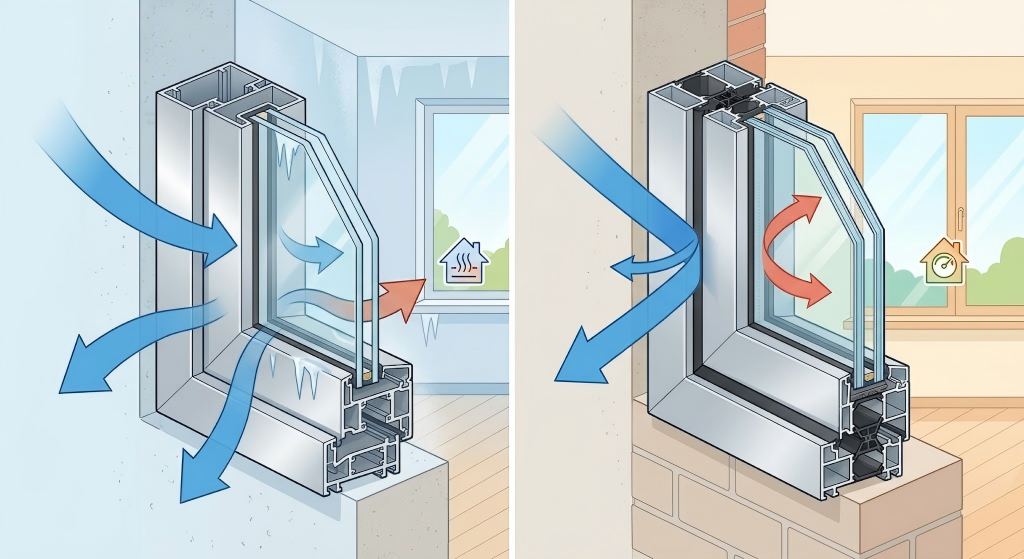
Short answer: when thermal break is worth specifying
Thermal-break aluminum makes the most sense when the project needs better thermal performance, lower condensation risk, or a more robust energy strategy than standard aluminum can reasonably provide.
That is not the same as saying every project needs it. Standard aluminum can still be a practical choice for common residential work, budget-driven projects, and cases where the buyer does not need the extra performance layer.
The decision is not about the frame name alone. It is about how the whole window system needs to perform, what the project is exposed to, and what the buyer is actually trying to solve.
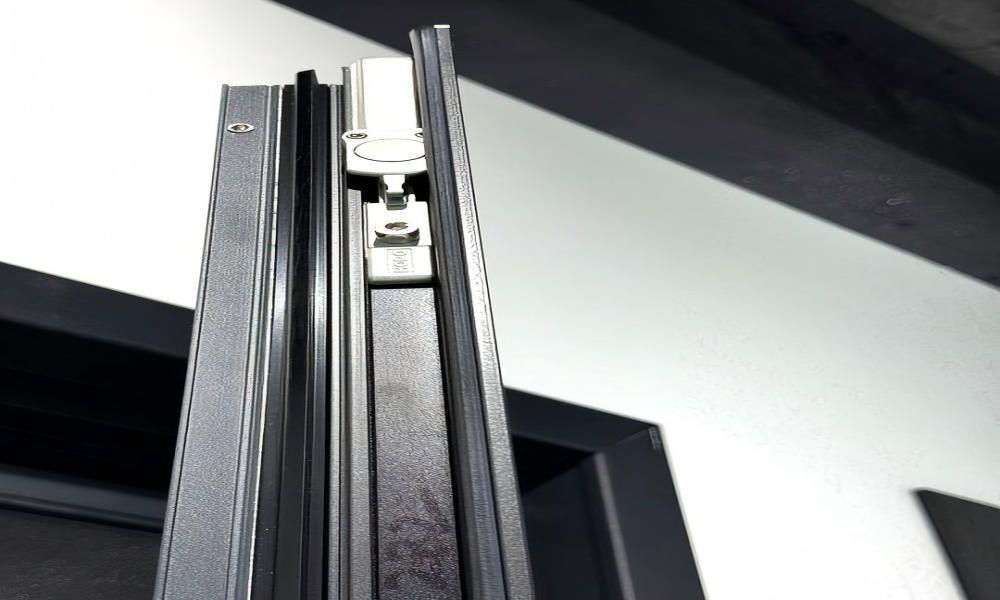
What changes between standard and thermal-break aluminum windows
The simple version is this:
- standard aluminum uses the aluminum frame as it is
- thermal-break aluminum inserts a low-conductivity separation between the inner and outer conductive parts
The American Institute of Architects defines a thermal break as a low-conductivity separation that reduces heat flow through a conductive frame element. It also describes a thermally broken system as one that separates conductive components with a low-conductivity barrier. That is the core idea.
So the thermal break is not a decoration, and it is not only a marketing label. It is a structural part of the framing system that changes heat transfer through the frame.
This matters because fenestration is not a single-material decision. The AIA also treats fenestration as a complete system that involves framing, glazing, air, heat, and moisture control layers. In other words, the buyer should compare the complete window package, not only the frame name.
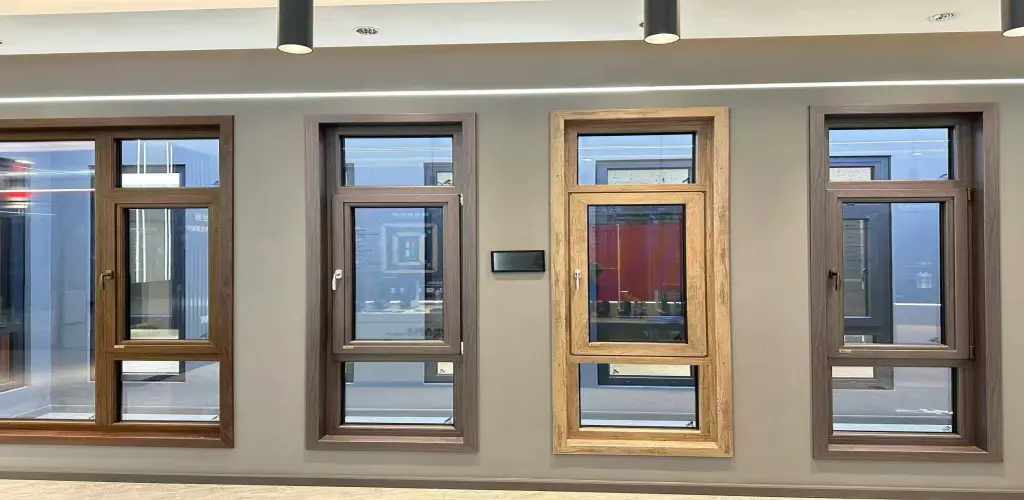
Standard aluminum vs thermal-break aluminum
| Item | Standard aluminum | Thermal-break aluminum |
|---|---|---|
| Frame behavior | Conductive metal frame with no insulating separation | Conductive frame interrupted by a low-conductivity barrier |
| Thermal performance | Usually lower | Usually stronger |
| Condensation risk | Higher in many demanding conditions | Lower in many demanding conditions |
| Best use | Basic, budget, or lower-demand projects | Premium, commercial, or energy-focused projects |
| Quote comparison | Must be matched carefully | Must be matched carefully |
That table is the practical summary. It does not mean thermal-break is always better. It means thermal-break is the more capable option when the project actually needs the extra performance.
Why buyers choose thermal break
Buyers usually do not ask for thermal break because they love the term. They ask for it because they want one of three outcomes:
- better thermal comfort
- less condensation risk
- a more credible energy strategy for the project
The logic is simple. Aluminum is a conductive material. If the project uses a highly exposed facade, a comfort-sensitive interior, or a higher-performance building envelope, the frame itself becomes part of the energy and comfort conversation.
That is why the quote should not begin with the frame label alone. It should begin with the project requirement.
Project conditions that push buyers toward thermal break
Thermal break becomes more attractive when the project has one or more of the following conditions:
- higher expectations for indoor comfort
- concern about condensation on the frame
- exposed elevations or stronger environmental load
- commercial or premium project positioning
- a stronger energy-performance target
FGIA explains that Performance Grade is tied to a Design Pressure range and to the applicable standard requirements. That does not mean every project needs a high-performance system. It means exposed or commercial elevations should be handled as a real performance discussion, not as a simple material-name comparison.
Thermal-break specification also needs the right system context. ASHRAE notes that thermal-break depth matters and that the frame and sash components need effective separation for best performance. So the buyer should ask how the thermal-break system is built, not just whether the supplier uses the phrase.
When standard aluminum is still acceptable
Thermal break is not a moral upgrade. It is a project choice.
Standard aluminum can still be acceptable when:
- the project is budget-driven
- the buyer wants a simpler system
- the climate and exposure do not justify the extra thermal layer
- the building use does not demand stronger comfort control
- the buyer is comparing options before narrowing the final system
This is why a good sales conversation should not force thermal-break on every customer. It should help the buyer decide whether the added performance is useful enough to justify the cost and configuration change.
That is also why the blog is a better container than a one-line FAQ. The FAQ can define the term. The blog can explain the choice.
How to compare supplier quotes on the same basis
Many bad comparisons happen because the buyer compares a standard-aluminum quote against a thermal-break quote without matching the rest of the system.
To avoid that, compare:
- frame type
- opening style
- dimensions
- glass build-up
- hardware level
- colour or finish
- quantity
- packing and delivery basis
- required performance or test documentation
NFRC treats U-factor, SHGC, and air leakage as distinct metrics for the rated configuration. That matters because a frame label alone does not tell you how the finished window will perform. If the project cares about thermal performance, ask for the relevant metrics for the configuration being quoted.
NFRC also separates condensation resistance as its own rating context, which is useful when the buyer is worried about interior moisture or visible condensation. Again, the point is not to promise a project result. The point is to ask for the right data.
What to ask for in an RFQ
If the buyer wants a proper comparison, the RFQ should include at least:
| RFQ field | Why it matters |
|---|---|
| Material choice | Tells the supplier whether standard aluminum or thermal-break aluminum should be quoted |
| Window size | Changes the frame, glass, and hardware scope |
| Opening style | Changes the construction and hardware package |
| Glass configuration | Changes performance and price |
| Hardware level | Changes durability and operating quality |
| Project climate / exposure | Helps the supplier judge whether thermal break is justified |
| Delivery basis | Changes the meaning of the price |
Durable’s own quote logic follows the same direction: material, size, opening style, hardware, and glass configuration all belong in the quote comparison. If you leave out those fields, you are not really comparing the same product.
For export or trade quotes, record the exact Incoterms rule and named place or port. ICC notes that Incoterms allocate cost, risk, and obligations between buyer and seller. That does not replace the product specification, but it does stop a product-only number from being mistaken for the full commercial offer.
A quick buyer rule of thumb
Use thermal break when the project is asking for more than basic aluminum can comfortably deliver.
Use standard aluminum when the project is simple, budget-sensitive, and does not need the added thermal layer.
That sounds blunt, but it is the right level of clarity for procurement. The real work is in the project conditions, not in the label.
Common buying mistakes
1. Treating the term as the decision
The term is not the decision. The project is the decision.
2. Comparing incomplete quotes
If one quote includes thermal break, better glass, and upgraded hardware, while another quote is only a basic frame offer, you are not comparing like for like.
3. Assuming thermal break always wins
That is too simple. Some projects do not need it, and forcing it everywhere can waste budget.
4. Ignoring the rest of the system
Frame name, glass, hardware, and delivery basis all affect the final offer.
5. Asking only for a definition
If that is all the buyer wants, the landing-page FAQ is enough. If the buyer needs a quote decision, the blog is the right place.
Why this article belongs on the blog
This topic belongs in a blog because it answers a procurement decision that is broader than the FAQ definition but narrower than a new product page.
The landing page already owns the main definition and product intent. The blog adds:
- comparison logic
- project-condition triggers
- RFQ guidance
- buyer mistake prevention
- internal links back to the product and contact pages
That is the exact job of a support article.
Use the product pages here:
Sources and article notes
- American Institute of Architects: Definitions for Building Performance — used for the thermal break and thermally broken system definitions, and the whole-system framing concept.
- NFRC home page / label context — used for U-factor, SHGC, air leakage, and condensation-resistance metric context.
- FGIA Performance Class Overview — used for Performance Grade and Design Pressure context.
- ICC Incoterms 2020 — used for trade-term and delivery-basis guidance.
- Durable quotation-process experience, reviewed August 2026 — used only for the first-party quote-comparison checklist and the bounded project note. No price, quantity, or certification claim is stated here.


