

When a buyer asks for the price of uPVC windows, the useful answer is rarely a single number. A sliding window for a low-rise housing project, a reinforced casement system with insulated glass, and a custom-colour window for an exposed facade may all be described as “uPVC windows,” yet they are not the same item to manufacture, pack, or compare.
For B2B purchasing, the practical question is:
Are two suppliers pricing the same window specification?
If the answer is no, the lower quotation may simply contain a lighter profile, different glass, basic hardware, a smaller size allowance, or a different packing and delivery basis. This guide explains the inputs that should be held constant before a contractor, distributor, architect, or importer compares uPVC window quotations.
It does not provide country-specific retail prices or installed-price ranges. Those figures change by market, labour cost, exchange rate, project location, and the exact system being supplied.
Start With the Specification, Not the Material Name
“Please quote uPVC windows” is a valid first enquiry, but it is not a finished specification. It gives a supplier a starting point for an indicative response, not enough information for a firm comparison.
At Durable, before providing a quote, we first confirm details such as window type, dimensions, glass specifications, hardware, profile requirements, quantities, and delivery needs. You do not need to provide every detail at the very beginning; discussions can start with approximate dimensions, the target market, window types, and material preferences. Remaining details can be clarified further before the final quote is prepared.
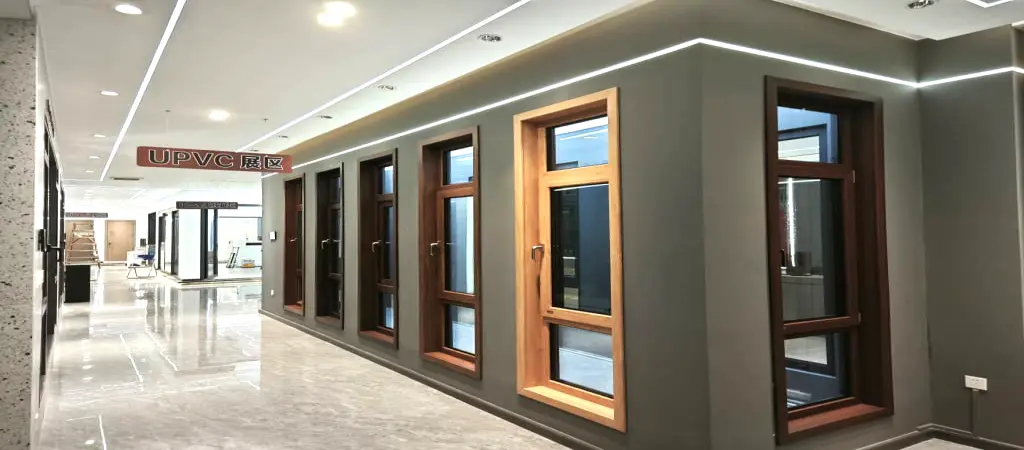
This matters because the public uPVC window range includes different opening systems, profile systems, glass options, colours, hardware, and project packing arrangements. Those options are not decorative labels. They are the parts of the window package that a supplier needs to identify before two quotations become comparable.
The Main Factors That Change a uPVC Window Quote
The table below is not a universal price list. It is a comparison checklist. Use it to make sure each supplier is working from the same project brief.
| Quote factor | Why it changes the quotation | What to give the supplier |
|---|---|---|
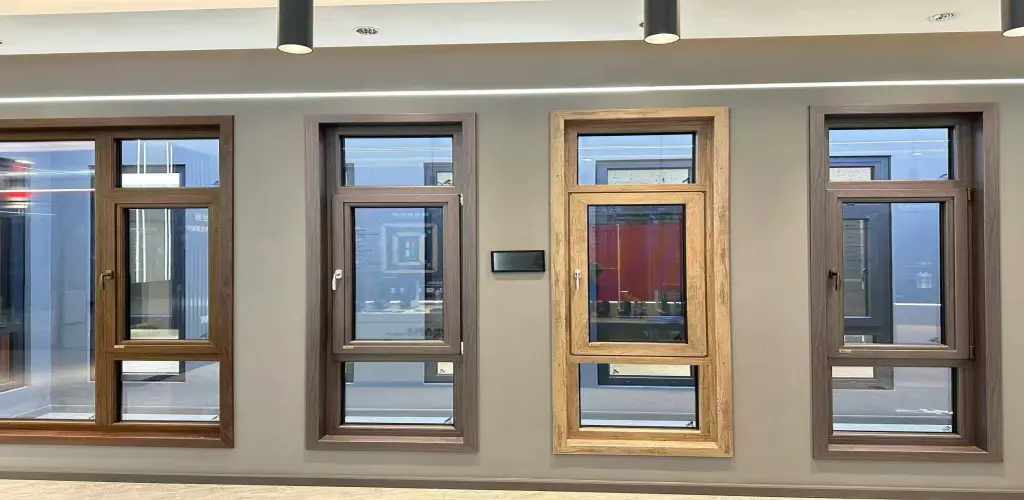
| Window type and opening method | A sliding, casement, awning, fixed, hung, or tilt-and-turn window uses a different frame layout, sash arrangement, sealing approach, and hardware set. | Window type, opening direction, and any preferred operation. |
| Dimensions | Width and height affect the amount of frame and glass, the hardware requirement, the manufacturing method, packing, and the project review. | Rough width x height is enough for a first discussion; provide a window schedule for a firm quote. |
| Quantity | Quantity affects production planning, batching, packing, and how a supplier prepares the offer. | Quantity by window type and size. |
| Profile system and reinforcement | Different profiles and reinforcement requirements are not interchangeable. They must be identified before a supplier comparison is meaningful. | Preferred series if known, wall-thickness requirement, reinforcement requirement, or permission for the supplier to recommend an option. |
| Glass build-up | Single, insulated, laminated, tempered, Low-E, tinted, and other glass configurations are different products with different safety, energy, solar-control, and acoustic purposes. | Glass type, pane build-up, thickness, coating, safety requirement, and any required performance document. |
| Hardware | Handles, hinges, rollers, locks, screens, and operating hardware vary by opening type and required service level. | Opening type, hardware preference, brand requirement if any, and required accessories. |
| Colour or finish | Standard colours and special finishes may require different materials or production steps. | Preferred colour, finish, and any reference code or sample. |
| Packing and delivery basis | Export packing, destination, loading method, and delivery terms change what the quotation actually includes. | Destination port or address, required packing, and preferred trade term if known. |
The purpose of this table is simple: do not compare one supplier's basic sliding-window offer with another supplier's reinforced casement offer and treat the difference as a material-price gap.
Window Type, Size, and Quantity Come First
The window schedule is often the best document a buyer can send. It tells the supplier how many windows are needed, their sizes, their opening methods, and where similar units can be grouped.
Without it, a supplier may have to assume a standard size or propose a broad price range. That can be useful for early budgeting, but it should not be used to decide which supplier is cheaper.
For example, one supplier may receive a request for “uPVC sliding windows” and assume repeated standard apartment openings. Another may receive drawings that show a mix of sliding units, fixed units, special bays, and non-standard sizes. The product name is similar; the work being quoted is not.
For a low-rise residential project in Panama, a builder began with a uPVC sliding-window requirement. Before the specification could be compared properly, the quotation still needed the opening sizes, glass, hardware, and quantity. This is an ordinary procurement step, not a complication created by the supplier. It is how a buyer avoids comparing incomplete offers.
If drawings are not ready, start with:
- the preferred window type;
- approximate width and height;
- estimated quantity;
- project country;
- uPVC, aluminium, or both as the material preference.
That is enough for a first exchange. A supplier can then identify the missing items before issuing a more specific proposal.
Profile and Reinforcement: Avoid Comparing Names Only
Profile labels can look similar on quotations while describing different systems. A fair comparison needs more than a series number or a generic phrase such as “premium uPVC.”
Ask each supplier to state what profile system is being proposed and whether reinforcement is included where the design requires it. If your project has a target wall thickness, a particular profile series, or a local specification, include it in the request. If it does not, ask for the supplier's recommended configuration and the reason for that recommendation.
The important point is not to force every project into the same profile. A small repeated opening and a larger opening may not need the same construction. The important point is that each supplier prices the same requirement before the buyer compares the total.
Durable's uPVC products offer a range of profile systems and support customized project configurations. Please consult the product page for available options, and then confirm the specific solution for your project via the quotation. Do not rely solely on the online listings to determine the technical specifications of a specific quote.
Glass Can Change Both the Window Package and the Performance Discussion
Glass is often where two quotations stop being equivalent. A window described as “double glazed” may still differ in pane build-up, coating, spacer, gas fill, safety glass, tint, or laminated construction. Buyers should therefore record the glass configuration beside the window size and opening type.
This is not only a quotation issue. The Florida Solar Energy Center at the University of Central Florida explains that window energy choices involve SHGC, U-factor, visible transmittance, and even operating type. It also warns that buyers should compare the same value type, because center-of-glass U-factor can differ from the whole-window assembly value. In other words, “double glazed” is a starting description, not a complete performance specification.
When energy or solar performance is part of the project brief, ask for values that apply to the rated product configuration. The National Fenestration Rating Council explains that U-factor measures how well a product keeps heat from escaping: lower values indicate better heat retention. NFRC also explains that solar heat gain coefficient, or SHGC, measures how much solar heat a product allows in; lower values resist more solar heat.
The American Institute of Architects defines SHGC as the ratio of solar heat gain transmitted through a fenestration product to the incident solar radiation and notes that lower SHGC values reduce cooling loads. It also describes low-e coatings as a way to improve thermal performance by reducing radiant heat transfer. Use these definitions as design-language references; do not convert them into a one-size-fits-all project requirement.
Those definitions are useful for a quotation checklist, but they are not a shortcut to a product claim. A uPVC frame alone does not establish the U-factor or SHGC of a finished window. The glass, frame, opening type, spacer, hardware, and tested or rated configuration matter. If a project requires documented performance, ask the supplier for the documentation that applies to the proposed product, not a generic statement about the frame material.
NFRC notes that commercial label certificates are project-specific and include certified ratings. That is a helpful procurement principle even when a project uses a different local compliance route: the evidence should match the actual window configuration and project requirement.
Add Project-Condition Requirements to the Quote Sheet
For a project with wind, water, air-leakage, or structural requirements, do not leave the performance requirement outside the quote sheet. Ask the project designer, engineer, or applicable local code route for the required documentation, then give the same requirement to every supplier. The Fenestration and Glazing Industry Alliance (FGIA) explains in its NAFS FAQ that Performance Grade is tied to a Design Pressure range and to tests for structural performance, water penetration, and air leakage. This does not mean every project needs the same rating. It means the buyer should not compare a quote with a stated requirement against a quote that has no stated requirement.
Hardware, Colour, and Accessories Are Not Minor Details
Buyers sometimes focus on profile and glass, then compare quotations without checking the hardware line. That creates a gap because operating hardware is linked to the opening method and the buyer's expected use.
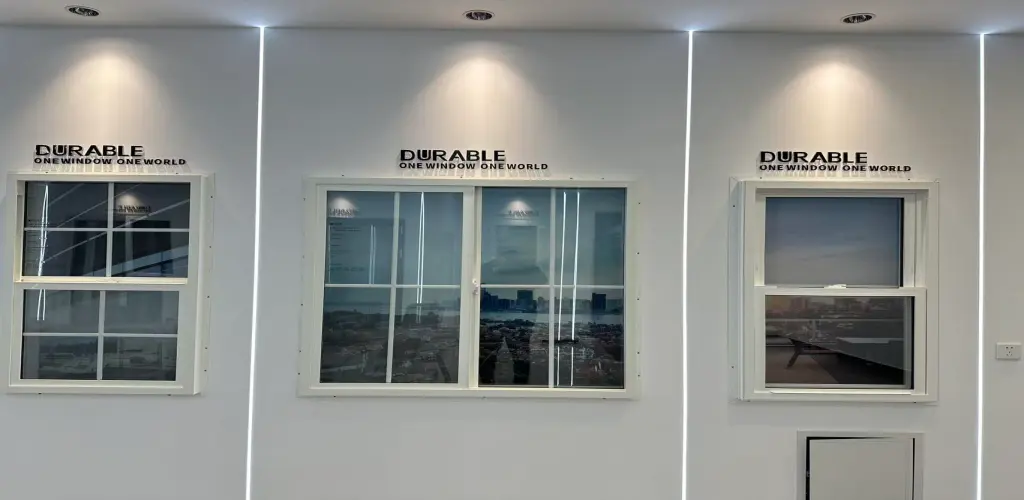
For a sliding window, ask about rollers, locks, handles, and screens where needed. For a casement or awning window, ask about hinges, handles, stays, and locking points. A quote should make clear whether hardware is a standard package, a named brand, or an upgraded requirement.
Colour and finish should also be written into the comparison sheet. A buyer does not need to know every manufacturing detail to ask the right question. It is enough to state the desired colour, wood-grain effect, custom finish, or colour reference where available. This prevents one supplier from pricing a standard finish while another prices a requested project finish.
The same principle applies to screens, restrictors, special locks, and other accessories. If one quote includes them and another does not, the quotations are not yet like for like.
Packing and Delivery Change the Meaning of a “Cheaper” Quote
An export quotation should be read as a package, not only as a unit price. Confirm what is included for protective materials, export packing, labels, loading, destination, and delivery terms.
Durable's product pages outline packaging options for projects and export shipments. While this background information serves as a useful reference, you should still clarify exactly which packaging services are included in your specific order. Packaging methods vary based on factors such as window type, dimensions, quantity, destination, and any special customer requirements.
When comparing suppliers, put the delivery basis in the same row as the product specification. A lower product-only figure may not be lower after the buyer accounts for different packing or delivery assumptions.
Where a quotation uses an Incoterms rule, record the exact rule, named place or port, and version. The International Chamber of Commerce describes Incoterms 2020 as rules that allocate cost, risk, and obligations between buyers and sellers. They do not replace the product specification, but they prevent a product-only figure from being mistaken for the same commercial offer.
A Simple Method for Comparing Two Supplier Quotes
Before deciding which quotation is better, create one comparison sheet with the same columns for every supplier:
- Window ID or room/location
- Window type and opening direction
- Width and height
- Profile system and reinforcement requirement
- Glass build-up
- Hardware and accessories
- Colour or finish
- Quantity
- Packing and delivery basis
- Required certificates, test documents, or project documents
Then check for blank cells. A blank cell is not automatically a problem, but it is a question that should be answered before a buyer treats one quotation as lower priced.
This method also helps when the buyer is still choosing between materials. If you need to compare uPVC and aluminium, first decide the project requirement, then compare the proposed systems. For broader material-selection guidance, see uPVC Windows vs Aluminium Windows: Which Is Better for Your Project?.
Use the Right Level of Price for the Right Project Stage
Not every project needs a full window schedule before the first conversation. The mistake is not asking for an early budget indication. The mistake is using an early indication as a final buying decision.
Stage 1: Budget indication
At this stage, a buyer may only know the window type, approximate opening sizes, quantity, country, and preferred material. That is enough to discuss a likely configuration and identify what will have the biggest effect on the next quotation. Treat the result as an initial planning figure, not as a final comparison between suppliers.
Stage 2: Comparable supplier quotation
This is the stage where the buyer should provide a schedule, drawings, glass preference, hardware requirement, finish, quantity, and delivery destination. The supplier can then price a defined package. This is the right time to build the comparison sheet and ask why any line item is different.
Stage 3: Order confirmation
Before production, the buyer and supplier should confirm the final window schedule, opening direction, glass, hardware, colour, packing, and delivery arrangement. A change made at this stage is not a surprise price increase; it is a change to the item being purchased. Keeping the approved details in one document helps both sides avoid an order that matches an old budget note but not the final project requirement.
For any item that remains undecided, mark it as “to be confirmed” rather than leaving it out of the comparison. This is especially useful for glass, hardware, colour, and delivery terms. It shows the buyer which part of the quote may change later and gives suppliers the same open questions to resolve.
Keep Product Supply and Site Installation Separate
This article is about comparing the supplied window package. It does not prove that two projects have the same site-installation scope. ASTM E2112-23 is a separate standard practice for installation of exterior windows, doors, and skylights; ASTM states that installed fenestration performance depends in part on proper installation procedures and workmanship. For a project quote, state whether installation is included, excluded, or separately scoped. That prevents the buyer from treating a factory product quotation as an all-in building-envelope price.
What to Send for a First Quote
Do not wait until every drawing is final. A first enquiry can be short:
- window type and approximate size;
- quantity and project country;
- uPVC, aluminium, or both options;
- glass, colour, or hardware preference, if known;
- drawings, photos, or a previous quotation, if available.
If the project is based on drawings or a window schedule, the OEM/ODM page explains the custom-manufacturing route. For a direct quotation request, use the contact page.
Common Mistakes That Produce Unhelpful Price Comparisons
Treating an indicative quote as a final project price
An early price can help with planning. It should not be treated as final when the size, glass, hardware, or quantity is still unknown.
Comparing different opening systems
Sliding, casement, awning, fixed, and tilt-and-turn windows should not be treated as the same unit merely because their opening sizes are close.
Comparing “double glazing” without the glass build-up
Ask what the glass configuration actually is. The phrase alone does not tell you the full construction or any applicable rated performance.
Leaving hardware off the comparison sheet
If one quotation has a basic hardware package and another includes a named requirement or additional accessories, compare the hardware before comparing the bottom line.
Ignoring packing and delivery terms
For export work, the buyer needs to know whether the price refers to the same packing and delivery basis.
Request a Comparable Project Quote
For uPVC windows, the first step is to determine the opening style, dimensions, quantity, project location, and any specific requirements for the glass or hardware. Durable is happy to assist you in finalizing the remaining configuration details and provide a project quotation. We invite you to browse Durable's uPVC window range or contact us directly with the relevant information.
Sources and Article Notes
- National Fenestration Rating Council (NFRC). Used for U-factor and SHGC definitions and for the principle that NFRC ratings apply to rated product configurations.
- Florida Solar Energy Center, University of Central Florida: Windows. Used for the explanation of SHGC, U-factor, visible transmittance, operation type, and the difference between center-of-glass and whole-window values.
- American Institute of Architects: Definitions for Building Performance. Used for SHGC and low-e coating definitions.
- FGIA Frequently Asked Questions. Used for the relationship between Performance Grade, Design Pressure, structural performance, water penetration, and air leakage.
- International Chamber of Commerce: Incoterms 2020. Used for the allocation of cost, risk, and obligations under a named trade term.
- ASTM E2112-23 Standard Practice for Installation of Exterior Windows, Doors and Skylights. Used to mark the boundary between product supply and separately scoped installation work.
- Durable uPVC Windows. Used for the public range of window types, configuration categories, and project/export packing context.
- Durable OEM/ODM. Used for the internal path from drawings or a window schedule to custom manufacturing.
- Durable quotation-process experience, reviewed August 2026. Used only for the first-party quote-comparison checklist and the anonymous Panama observation. No project price, quantity, client identity, performance result, or certification claim is stated in this article.


